Taking Control of Aging Through Fitness, Nutrition, and Relationships | Dr. Mason Blake Pimsler, MD, JD

Every week in my internal medicine and geriatrics practice at NYC Health + Hospitals/Lincoln in the South Bronx, I sit across from patients in their seventies, eighties, and nineties who share the exact same chronological age on paper—yet live in completely different physical realities. One 82-year-old walks into the clinic unassisted, manages her own errands, cooks for her grandchildren, and debates current events with sharp recall. Another patient born in the exact same year is struggling with recurrent falls, frailty, polypharmacy, and profound isolation.
That stark contrast is the heart of modern geriatric medicine. While genetics certainly loads the gun, decades of clinical research—and my own daily experience at the bedside—confirm that lifestyle and environment pull the trigger. Aging is inevitable, but rapid functional decline is not. The real goal of preventive medicine is not merely extending lifespan (the total number of years you live), but maximizing healthspan: the number of years you live with physical independence, cognitive clarity, and emotional vitality.
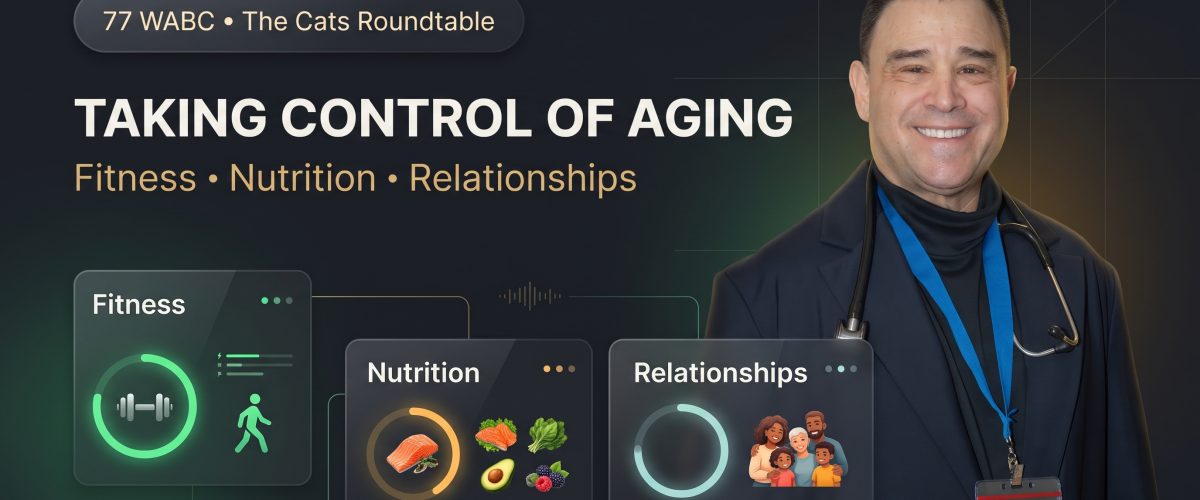
During my recent conversation on 77 WABC’s The Cats Roundtable, we focused on what patients can actually control right now. You do not need experimental biohacks or boutique longevity clinics to change the trajectory of your later years. Taking control of aging rests on three deeply interconnected clinical pillars: purposeful physical fitness, targeted metabolic nutrition, and active human relationships.
Strength & Mobility
Preserving lean muscle mass, bone density, cardiovascular reserve, and balance to prevent frailty and protect cognitive function.
Precision Nutrition
Overcoming age-related protein resistance, stabilizing blood sugar, prioritizing hydration, and feeding the gut-brain axis.
Social Vitality
Treating loneliness as a serious clinical risk factor by cultivating community, intergenerational ties, and daily purpose.
Pillar 1: Fitness Is Your Strongest Insurance Policy Against Frailty
If I could write a single prescription that lowered blood pressure, improved insulin sensitivity, strengthened bone density, lifted mood, reduced dementia risk, and cut all-cause mortality, every pharmaceutical company in the world would compete to manufacture it. That intervention already exists—it is consistent, structured physical exercise.
Beginning around age 30, adults naturally begin losing approximately 3% to 8% of their skeletal muscle mass per decade—a progressive condition known medically as sarcopenia. After age 60, that decline accelerates unless you actively intervene. In geriatrics, muscle is not about vanity or aesthetics; skeletal muscle is an organ of longevity. It acts as your body’s primary glucose sink, stabilizes your joints, protects your skeleton during a stumble, and provides the physiological reserve needed to recover from an infection, surgery, or hospitalization.
Equally compelling is the impact of movement on the aging brain. Aerobic and resistance exercise stimulate the release of Brain-Derived Neurotrophic Factor (BDNF), a protein that supports neuroplasticity, strengthens memory circuits in the hippocampus, and helps counter age-related cognitive decline. To build a truly resilient body, you need four distinct types of movement working together. Click through the interactive tabs below to see how I counsel patients to structure their routine:
Resistance Training: The Antidote to Sarcopenia & Osteoporosis
Walking alone is wonderful for your heart, but it is not enough to halt muscle and bone loss. Aim for two to three days per week of resistance training targeting all major muscle groups—legs, hips, back, chest, core, and shoulders. You do not need heavy barbell racks; resistance bands, light dumbbells, machines, or controlled bodyweight movements (like sit-to-stands from a chair and wall push-ups) deliver powerful benefits. Mechanical tension signals your bones to remodel and stay dense, directly reducing the risk of life-altering hip and vertebral fractures.
Zone 2 Cardio: Building Heart & Mitochondrial Reserve
Cardiorespiratory fitness (often measured as VO2 max) is one of the strongest independent predictors of long-term survival in medical literature. Aim for at least 150 minutes per week of moderate-intensity aerobic activity—such as brisk walking, swimming, cycling, or dancing. A simple clinical benchmark is the “talk test”: you should be breathing noticeably faster, able to speak in full sentences, but unable to sing comfortably. This steady-state effort improves endothelial function, lowers resting blood pressure, and keeps your cellular mitochondria efficient.
Proprioception & Fall Prevention
Falls are the leading cause of injury-related hospitalization and loss of independence among adults over 65. Balance is a neurological skill—and like any skill, it fades if you stop practicing it. Incorporate 10 minutes of balance work three or more times a week. Practice single-leg stands near a kitchen counter for safety, heel-to-toe tandem walking, Tai Chi, or gentle yoga. Strengthening your ankles, calves, and hip abductors dramatically improves your reaction time if you trip on an uneven sidewalk.
Breaking Up Sedentary Time (NEAT)
Even a 45-minute morning workout cannot fully undo ten uninterrupted hours of sitting. Non-Exercise Activity Thermogenesis (NEAT)—the gentle movement woven throughout your day—plays a major role in glucose control and joint lubrication. Take a 10-minute walk after meals to blunt post-prandial blood sugar spikes, take the stairs when safe, garden, stretch during television commercials, and stand up at least once every hour.
Pillar 2: Nutrition That Protects Your Muscles, Metabolism, and Brain
Nutritional needs do not stay static across a lifetime. One of the most common mistakes I see older adults make is eating the exact same way they did at age 35—or worse, drastically undereating protein out of habit or reduced appetite. As we age, our bodies experience two simultaneous shifts: our resting metabolic rate gradually slows, while our muscles develop anabolic resistance, meaning they require a stronger protein signal to stimulate repair and maintenance.
For most healthy adults over 60, standard minimum protein guidelines (0.8 grams per kilogram of body weight) are simply too low to prevent muscle wasting. Geriatric nutrition experts increasingly recommend aiming for approximately 1.0 to 1.2 grams of protein per kilogram of body weight per day—distributed evenly across meals (roughly 25 to 35 grams of high-quality protein per meal)—unless you have advanced chronic kidney disease requiring medical protein restriction. Pairing adequate protein with resistance training creates a powerful synergistic effect that keeps you strong.
Beyond protein, healthy aging depends on controlling chronic, low-grade systemic inflammation—a process researchers call “inflammaging.” Diets heavy in added sugars, refined starches, and ultra-processed seed-oil snacks drive insulin resistance, vascular stiffening, and cognitive fog. Conversely, Mediterranean-style and MIND-diet eating patterns—rich in colorful polyphenols, omega-3 fatty acids, legumes, leafy greens, and extra-virgin olive oil—consistently show protective effects for both the heart and the aging brain.
Four Overlooked Nutritional Gaps in Older Adults
- Hydration: Our natural thirst signal blunts with age. Mild dehydration frequently mimics fatigue, dizziness, constipation, or acute confusion—keep water visible and sip consistently throughout the day.
- Vitamin B12: Reduced stomach acid and common medications (like metformin or acid-reducing PPIs) impair B12 absorption, which can quietly affect nerve function and memory.
- Vitamin D & Calcium: Essential partners for bone integrity, muscle contraction, and immune regulation, especially during northern winters with limited sunlight.
- Dietary Fiber: Aiming for 25–30+ grams daily nourishes the gut microbiome, lowers LDL cholesterol, stabilizes blood sugar, and reduces systemic inflammation.
✖ Accelerators of Biological Aging
- Liquid sugars, sodas, sweetened teas, and high-sugar fruit juices
- Ultra-processed packaged foods with long chemical ingredient lists
- Refined white breads and pastries that trigger rapid insulin spikes
- Excess sodium and processed meats that elevate blood pressure
- Heavy or nightly alcohol use, which disrupts deep restorative sleep and brain health
✔ Daily Longevity Staples
- High-quality proteins: wild salmon, eggs, Greek yogurt, poultry, tofu, and lentils
- Dark leafy greens and cruciferous vegetables (spinach, kale, broccoli)
- Polyphenol-rich berries (blueberries, blackberries, strawberries) for cognitive support
- Anti-inflammatory fats: extra-virgin olive oil, walnuts, avocados, and chia seeds
- Fermented foods (kefir, plain yogurt, sauerkraut) to strengthen gut immunity
Pillar 3: Relationships, Community, and the Biology of Connection
Patients are often surprised when a physician asks about their friendships, family contact, or weekly social routine during a medical appointment. Yet as I emphasized on 77 WABC, relationships are not a soft lifestyle perk—they are a biological necessity.
Public health data, including landmark advisories from the U.S. Surgeon General, has demonstrated that chronic social isolation and loneliness increase the risk of premature death at a magnitude comparable to smoking up to 15 cigarettes a day—and carry a greater mortality risk than obesity or physical inactivity alone. Loneliness is also closely linked to a roughly 29% higher risk of heart disease, a 32% higher risk of stroke, and a 50% increased risk of developing dementia in older adults.
Why does human connection affect physical organs so profoundly? From an evolutionary standpoint, humans are wired to survive in groups. When a person experiences chronic isolation, the brain interprets it as a persistent threat to survival. That triggers a low-grade, nonstop stress response: elevated cortisol levels, heightened sympathetic nervous system activity, disrupted sleep architecture, elevated blood pressure, and increased inflammatory markers (such as IL-6 and C-reactive protein). Over years, that chronic physiological stress accelerates vascular wear and tear and impairs immune defense.
On the flip side, rich social engagement acts as cognitive cross-training. Holding a lively conversation, navigating humor, listening with empathy, and coordinating plans with friends or family lights up multiple neural networks simultaneously. Furthermore, having people who count on you creates a sense of purpose—what Okinawan centenarians call Ikigai, or a reason to get out of bed each morning.
Four Practical Ways to Invest in Your “Social Portfolio”
- Schedule Connection Like a Medical Appointment: Do not wait for holidays or spare time. Put a recurring weekly coffee, phone call, or neighborhood walk with a friend directly on your calendar.
- Combine Movement With Community: Join a local walking club, senior center fitness class, pickleball group, or Tai Chi session. You double the longevity benefit by stacking physical exercise and social bonding.
- Build Intergenerational Bridges: Volunteer at a school, mentor younger professionals, or engage regularly with nieces, nephews, or grandchildren. Intergenerational interaction keeps your perspective fresh and lowers depression risk.
- Address Sensory Barriers Early: Untreated hearing loss and vision changes are two of the biggest silent drivers of social withdrawal. Getting your hearing checked and wearing properly fitted hearing aids can dramatically restore social confidence and protect cognitive health.
Putting It All Together: A Realistic Weekly Longevity Blueprint
Lasting health rarely comes from extreme overhauls that burn out by week three. It comes from sustainable, repeatable rhythms. Here is an example of how all three pillars fit comfortably into an ordinary week:
Frequently Asked Questions About Healthy Aging
Not at all. Clinical studies consistently show that adults in their 70s, 80s, and even 90s can build measurable muscle strength, improve gait speed, and reduce fall risk within just 8 to 12 weeks of supervised resistance training. Always get clearance from your physician before starting a new regimen, begin with light resistance or bodyweight, and focus on controlled form over heavy weight.
While general guidelines suggest 0.8 grams per kilogram of body weight, most geriatricians recommend 1.0 to 1.2 grams per kilogram daily for healthy older adults to overcome age-related anabolic resistance and protect muscle mass. Spreading protein across breakfast, lunch, and dinner (around 25–35 grams per meal) maximizes muscle protein synthesis. If you have chronic kidney disease, confirm your exact target with your physician first.
Transitions like retirement, relocation, or bereavement naturally disrupt daily routines—and rebuilding takes gentle, intentional steps. Start small with low-pressure environments that meet on a fixed schedule: a neighborhood walking club, a library book group, a community college audit class, a house of worship, or a local volunteer organization. Repeated, familiar faces are the fastest bridge from casual acquaintances to genuine friendships.
In addition to blood pressure, lipid panels, and hemoglobin A1c for metabolic health, ask your primary care physician or geriatrician about checking Vitamin D, Vitamin B12, thyroid function, kidney function, bone mineral density (DEXA scan when eligible), hearing and vision screenings, and an annual medication review to eliminate unnecessary prescriptions that may increase fall or fatigue risk.
The Bottom Line: Start Where You Are
Taking control of aging does not require perfection. It requires consistency. Pick one strength habit, one nutrition upgrade, and one phone call or social plan to commit to this week. Every brisk walk, every protein-rich meal, and every meaningful conversation is a deposit into your future independence—and it is never too early, or too late, to start investing.
About the Author
Dr. Mason Blake Pimsler, MD, JD, is an attending physician in internal medicine and geriatrics at NYC Health + Hospitals/Lincoln in the South Bronx and completed his geriatrics fellowship at SUNY Downstate. Bilingual in English and Spanish, Dr. Pimsler is a regular medical commentator on 77 WABC’s The Cats Roundtable.
Medical Disclaimer: This article is for educational and informational purposes only and does not constitute medical advice, diagnosis, or treatment. Always consult your physician or a qualified healthcare provider before making changes to your exercise, diet, or medication plan.