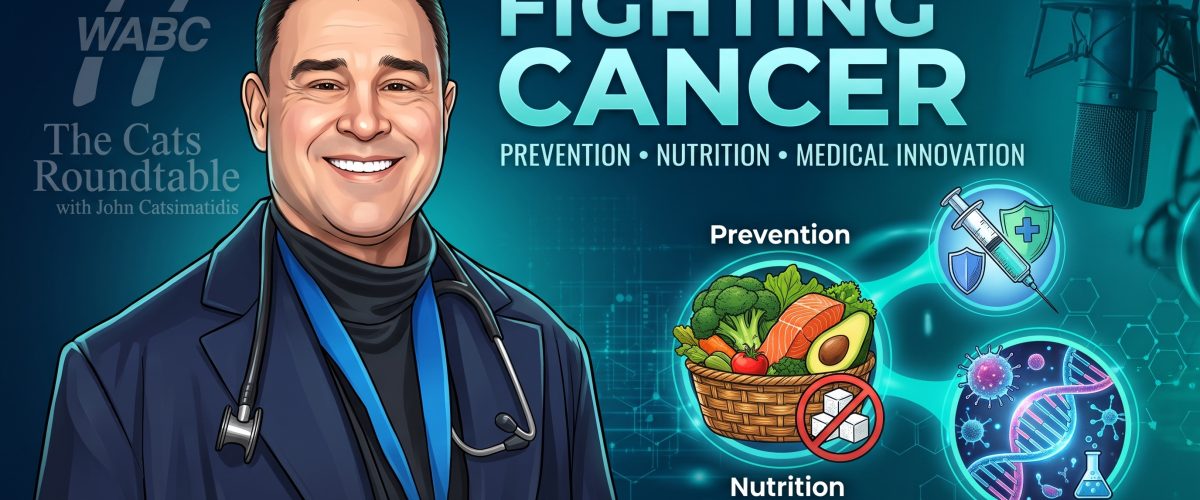
Fighting Cancer Through Prevention, Nutrition, and Medical Innovation | Dr. Mason Blake Pimsler, MD, JD

In clinical practice, few words carry more weight than a cancer diagnosis. Over the past few decades, medicine has achieved remarkable breakthroughs with targeted chemotherapies, precision radiation, and immune checkpoint inhibitors. Yet as I noted on 77 WABC, even with all of our modern tools, we are still not beating cancer outright in 2026. Too many families continue to lose loved ones to malignancies detected too late or tumors that adapt to resist standard treatment.
Changing the trajectory of cancer care requires moving beyond a single silver bullet. As an internal medicine physician and geriatrician caring for patients in the Bronx and across New York, I view cancer defense as a coordinated strategy built on three essential pillars:
Proactive Prevention
Stopping malignancies before they start through evidence-based preventive vaccines (such as HPV and Hepatitis B) and consistent, age-appropriate cancer screenings.
Metabolic Nutrition
Eliminating added sugars, stabilizing insulin levels, and fueling immune surveillance with whole, anti-inflammatory foods.
Medical Innovation
Harnessing FDA-approved therapeutic cancer vaccines and next-generation personalized mRNA immunotherapies to train the immune system.
Pillar 1: Prevention Starts Long Before a Diagnosis
The most effective cancer treatment is preventing the malignancy from ever forming. Yet in primary care, two of our most powerful preventive tools—cancer-preventing vaccines and routine screenings—remain consistently underutilized.
Many patients think of vaccines strictly in terms of seasonal respiratory viruses. In reality, preventive oncology relies heavily on immunization. The human papillomavirus (HPV) vaccine is one of the greatest public health successes of modern medicine, dramatically reducing the risk of cervical cancer as well as anal, vaginal, penile, and a rising number of head and neck (oropharyngeal) cancers. Similarly, the Hepatitis B vaccine directly lowers the risk of chronic liver inflammation and hepatocellular carcinoma (liver cancer).
Clinical Prevention Checklist to Review With Your Physician
- Colorectal Screening: Begin at age 45 for average-risk adults (colonoscopy or approved stool-based testing).
- Breast Cancer Screening: Regular mammograms starting at age 40, or earlier with family history or genetic risk factors.
- Lung Cancer Screening: Annual low-dose CT scans for eligible adults aged 50–80 with a significant smoking history.
- Cervical & Prostate Discussions: Routine Pap/HPV testing per guidelines, and individualized PSA screening discussions for men.
- Preventive Vaccines: Verify HPV and Hepatitis B immunization status with your primary care doctor.
Pillar 2: Nutrition, Metabolism, and the Truth About Sugar
Patients frequently ask what they can control on a daily basis to lower their cancer risk or support their bodies during recovery. My answer almost always begins with metabolic health—specifically, added sugar and refined carbohydrates.
To understand how closely cancer metabolism is linked to glucose, consider how oncologists stage tumors using a PET scan (Positron Emission Tomography). Before the scan, a patient is given a tiny dose of radiolabeled glucose. Because many malignant cells are metabolically hyperactive—a phenomenon known in oncology as the Warburg effect—they absorb glucose far more rapidly than surrounding healthy tissue, causing tumors to literally light up on the imaging screen.
To be clear: cutting out sugar is not a substitute for evidence-based oncology care. However, chronically elevated blood glucose, hyperinsulinemia, and visceral fat drive systemic inflammation and growth-factor signaling (such as IGF-1) that create a hostile internal environment for immune surveillance. Reducing added sugars as close to zero as possible is one of the highest-impact lifestyle upgrades you can make.
✖ Minimize or Eliminate
- Sugar-sweetened beverages, sodas, and sweetened coffee drinks
- Ultra-processed snacks, refined white flour, and packaged pastries
- Hidden sugars in bottled sauces, dressings, and flavored yogurts
- Processed meats (deli meats, hot dogs, bacon) linked to colorectal risk
✔ Prioritize Daily
- Cruciferous vegetables (broccoli, Brussels sprouts, kale, cauliflower)
- Omega-3-rich lean proteins (wild salmon, sardines, legumes)
- High-fiber whole foods that support gut microbiome immunity
- Healthy fats (extra-virgin olive oil, avocados, raw nuts)
Pillar 3: Therapeutic Cancer Vaccines Available Today
While preventive vaccines protect healthy cells from cancer-causing viruses, therapeutic cancer vaccines are engineered to treat existing malignancies by teaching a patient’s own immune system to recognize and destroy tumor cells. Click the tabs below to explore the three primary FDA-approved therapeutic cancer vaccine approaches used in clinical practice today:
Sipuleucel-T (Provenge) for Metastatic Prostate Cancer
Provenge is a personalized cellular immunotherapy approved for men with advanced, hormone-resistant metastatic prostate cancer. A patient’s own immune cells (dendritic cells) are collected through leukapheresis, exposed in a specialized laboratory to a protein found on prostate cancer cells (PAP), and infused back into the patient. Once reintroduced, these trained immune cells direct T-cells to locate and attack prostate cancer cells that have spread to the bones or lymph nodes—an approach shown in clinical trials to extend overall survival.
Bacillus Calmette-Guérin (BCG) for Early-Stage Bladder Cancer
Originally developed a century ago as a tuberculosis vaccine, BCG remains one of the most effective immunotherapies in urologic oncology. For patients with early-stage, non-muscle-invasive bladder cancer, BCG is instilled directly into the bladder through a catheter. It stimulates a vigorous localized immune response along the bladder lining, recruiting immune cells to clear microscopic residual tumor cells and significantly lowering the risk of cancer recurrence and progression.
Talimogene Laherparepvec (Imlygic / T-VEC) for Melanoma
Imlygic is an oncolytic viral therapy approved for patients with advanced, unresectable melanoma. A genetically modified herpes simplex virus is injected directly into accessible melanoma lesions. The therapy delivers a one-two punch: it replicates inside and bursts tumor cells directly, while simultaneously releasing an immune-stimulating protein (GM-CSF) that alerts the broader immune system to hunt down melanoma cells elsewhere in the body.
Looking Ahead: The Personalized mRNA Frontier
If the past few years proved anything to the scientific community, it is what biotechnology can accomplish when research momentum and resources align. As I shared on 77 WABC: if we could develop effective mRNA vaccines for COVID-19 in record time, we can do it for cancer.
Major pharmaceutical leaders—including Moderna and Merck—are advancing late-stage clinical trials evaluating individualized neoantigen mRNA therapies paired with checkpoint inhibitor immunotherapy (such as Keytruda) for high-risk melanoma, non-small cell lung cancer, and other solid tumors. Unlike traditional one-size-fits-all drugs, a personalized mRNA cancer vaccine is custom-designed from a patient’s own tumor biopsy. It encodes dozens of unique tumor markers, giving the immune system a precise genetic blueprint to recognize and eliminate cancer cells while sparing healthy tissue.
Frequently Asked Questions
No. Diet alone cannot cure cancer and should never replace evidence-based oncology treatments such as surgery, chemotherapy, radiation, or immunotherapy. However, eliminating added sugars helps lower chronic inflammation, stabilize insulin levels, and support overall metabolic and immune health—both for prevention and alongside medical treatment.
Personalized mRNA cancer vaccines are currently in advanced Phase 3 clinical trials and are not yet widely FDA-approved for standard commercial use. Patients with high-risk cancers—such as resected Stage III/IV melanoma—can speak with their oncologist about eligibility for ongoing clinical trials.
While the HPV vaccine is most effective when given in adolescence before exposure, the FDA has approved it for adults up to age 45. Adults between 27 and 45 should discuss their individual risk profile and potential benefits with their primary care physician.
About the Author
Dr. Mason Blake Pimsler, MD, JD, is an attending physician in internal medicine and geriatrics at NYC Health + Hospitals/Lincoln in the South Bronx and completed his geriatrics fellowship at SUNY Downstate. Bilingual in English and Spanish, Dr. Pimsler is a regular medical commentator on 77 WABC’s The Cats Roundtable.
Medical Disclaimer: This article is for educational and informational purposes only and does not constitute medical advice, diagnosis, or treatment. Always consult your physician or a qualified healthcare provider with questions about a medical condition or treatment plan.